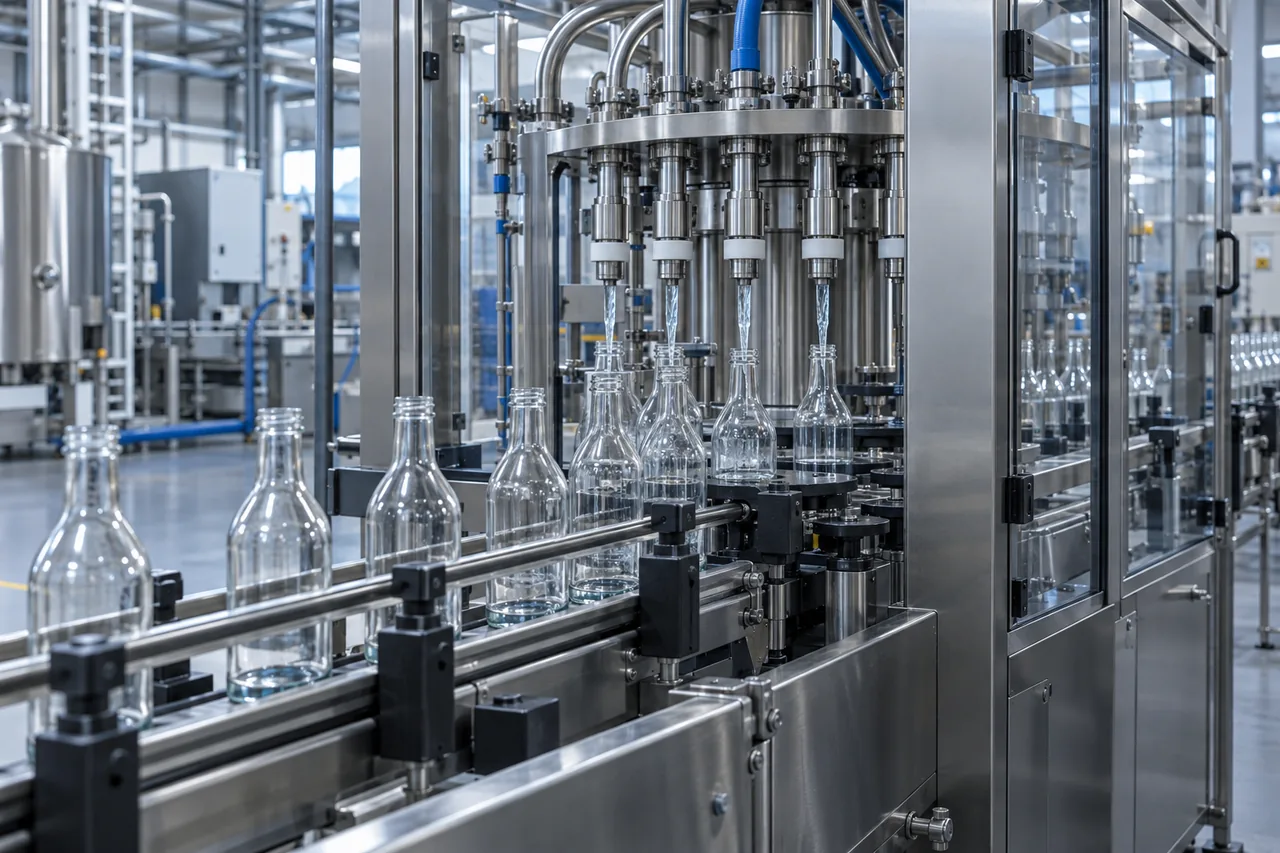
Bottling machine maintenance starts with the condition of the machine, the manufacturer’s instructions and its operating conditions. A repair addresses an identified problem; an overhaul may require a broader assessment of components and mechanical assemblies. Choosing the work therefore means understanding what happens and under which conditions before deciding what to replace.
People responsible for a production line know the impact of an unexpected stoppage. However, intervening without a clear picture can also leave the underlying cause unresolved. A well-prepared request supports discussions between production, maintenance and the people who will carry out the work.
FDtech has specific experience with bottling machinery, including construction and assembly, maintenance, repair and overhaul work to be assessed for each machine.
Maintenance, repair and overhaul: what is the difference?
These activities can overlap within the same job. This practical distinction helps describe the initial requirement without replacing a technical assessment.
| Requirement | Purpose of the discussion | Information to gather |
|---|---|---|
| Scheduled maintenance | Define activities appropriate to the machine’s condition and use | Manual, maintenance history and available downtime window |
| Repair | Identify and address a fault or abnormal behaviour | Symptoms, conditions in which they occur and work already performed |
| Overhaul | Assess more extensive restoration of components or assemblies | Machine condition, recurring problems and objectives of the work |
A fault does not always require a complete overhaul. Similarly, repeatedly replacing a single part may be insufficient if the problem involves other elements. The scope should be defined after examining the context.
What observations should you describe before requesting work?
Provide precise observations gathered during normal operations and in accordance with company procedures. For example:
- where in the machine or line the problem occurs;
- whether the abnormal behaviour is continuous or appears under specific conditions;
- whether it relates to a format, a stage of the cycle or a particular configuration;
- whether noise, vibration, leaks or irregular behaviour have been observed compared with normal operation;
- which stoppages and previous interventions have been recorded.
These observations are clues to assess, not a diagnosis. A noise or stoppage can have different causes. Describing it precisely is more useful than deciding which component to replace without checking.
Photographs and documents can support the request, but they must be collected without exposing anyone to risk. Checks and interventions must be performed by competent personnel with the machine in the safe conditions required by the manufacturer and company procedures.
When should an overhaul be considered?
An overhaul warrants a technical discussion when problems recur, when several components need to be assessed together or when individual repairs do not clarify the overall condition.
The relationship between a part and the rest of the machine also matters. A mechanical assembly may function correctly only if fixings, movements and connections with other elements meet the required conditions. The assessment should therefore consider the elements around the point where the abnormal behaviour appears.
Machine age alone does not determine the work. Information about condition, use, previous interventions and the required outcome is necessary. FDtech therefore starts with the problem and operating conditions before agreeing on machine repair and overhaul activities.
How to prepare your maintenance request
Before making contact, gather the information already available:
- Machine identification. Manufacturer, model and other useful references from its documentation.
- Problem description. What happens, when it started and under which conditions.
- Production context. The machine’s role in the line and the effect of the issue on work.
- History. Previous repairs, replacements or modifications, where documented.
- Technical material. Available manuals, drawings, photographs and component references.
- Organisational requirements. Site location, urgency and possible downtime windows.
If information is missing, say that it needs to be obtained. A precise request describing what is known is preferable to filling gaps with assumptions.
In FDtech’s form, you can select the request type and describe the machine in the message. Also indicate which documents are available so that their sharing can be agreed during the discussion.
Planning downtime: activities, parts and restart
Organising work involves more than choosing when to stop the machine. Clarify the planned activities, which components need to be assessed and what information is required before work begins.
Share the available production windows and constraints on access to the installation. Parts availability, any manufacturing work and the machine’s actual condition can affect scheduling. Timing must be confirmed after the technical discussion.
It is also useful to agree how the completed work will be checked and which checks are needed before returning to production, together with those responsible for the installation. Cleaning activities, process checks and other line requirements must be coordinated with the applicable procedures.
FDtech considers industrial maintenance work at customers’ premises. Location, availability and scope depend on the individual request: there is no automatic response time that applies to every machine.
Overhaul or replacement: what should be assessed?
The decision requires a comparison of machine condition, the work needed and the function it must continue to perform. Cost is one factor; parts availability, expected downtime and suitability for production requirements also matter.
An overhaul does not automatically produce the equivalent of a new machine. The restoration objective and its limits should be agreed. If the project requires modifications, these should be assessed separately from simply restoring operation.
Frequently asked questions about bottling machine maintenance
How often should maintenance be performed?
There is no single interval for all machines. Scheduling depends on the manufacturer’s instructions, use, operating conditions and maintenance history. This information forms the basis of the technical discussion.
Is a photograph enough to decide what work is needed?
It can help identify the machine or explain a visible issue. It does not always establish the cause or necessary work: documentation, clarification and an assessment of the machine may be required.
Can FDtech work at our premises?
FDtech considers work at customers’ premises in Italy and, when the project requires it, abroad. The practical arrangements depend on the machine, work and availability to be agreed.
Can we request urgent work?
You can indicate the urgency and the problem’s effect on production. FDtech assesses the request and possible work; reporting an urgent issue does not automatically confirm response times.
Describe the machine and problem to FDtech
To get started, provide the machine, issue, site location and urgency, together with the technical information available. Request an assessment from FDtech to clarify the work and the next step.