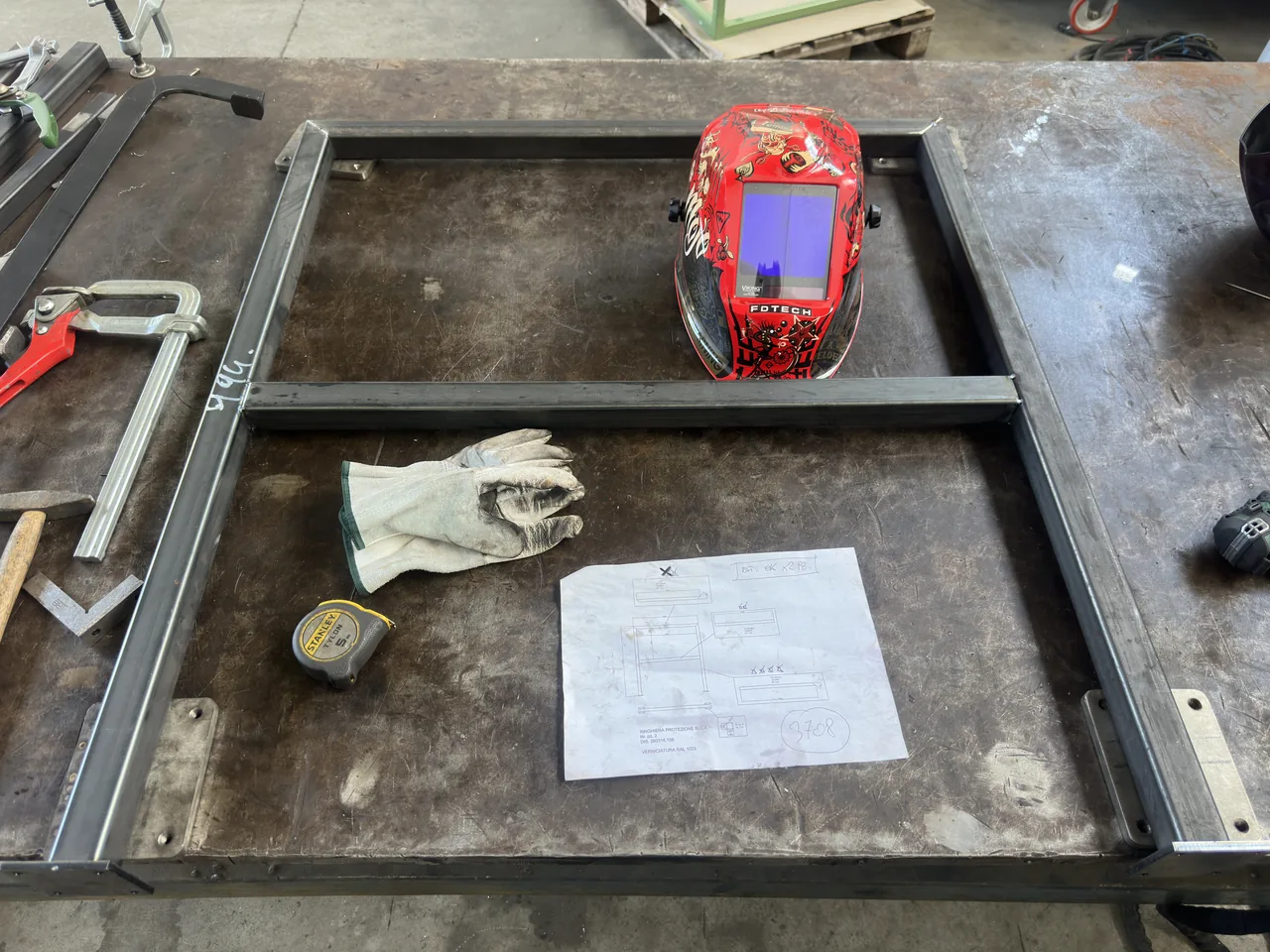
To request a quotation for custom stainless steel fabrication, provide information about the part’s purpose, material, dimensions and quantity. If available, include the latest drawing, required finishes and assembly conditions. You do not need to have resolved every detail: distinguish what is already defined from what needs to be assessed together.
A frame that must fit into a machine, a support fixed to an existing structure and a replacement component may appear to be similar requests. However, clearances, mating parts and operating conditions differ. A reliable quotation starts with these differences.
FDtech produces stainless steel and steel fabrication based on drawings and project requirements, with an operational workshop in Langhirano, in the province of Parma. The initial discussion helps clarify the work before production begins.
Information to prepare before your request
This table can help you gather the essential details. If an item has not yet been defined, say so in your request.
| Information | What to specify | Why it matters |
|---|---|---|
| Purpose | Where the component will be used and what it must do | Places its dimensions in context |
| Drawing | Dimensions, revision and parts to be produced | Avoids working from different versions of the same part |
| Material | Required stainless steel grade and thickness, if defined | Influences the manufacturing process |
| Quantity | Number of parts and possible repeat orders | Distinguishes a single job from recurring supply |
| Finish | Visible surfaces and project requirements | Clarifies the expected result |
| Assembly | Clearances, fixings and accessibility | Helps assess integration with existing equipment |
| Timing | Desired date and project constraints | Supports realistic scheduling discussions |
Technical drawings: dimensions, revisions and details to clarify
If you have a drawing, identify the version to use. Where several revisions exist, specify the valid one and the details that have changed. A relocated hole or an updated dimension can affect assembly even when the component’s overall appearance remains the same.
Overall dimensions are not always enough. Highlight the points that must align with other elements: fixing centres, contact surfaces, openings and available clearances. If the design specifies tolerances, meaning permitted deviations from dimensions, include them where required.
Asking for maximum precision everywhere is less useful than explaining which dimensions determine performance and which need further discussion. A technical assessment helps make these constraints explicit.
FDtech’s technical drawing and project support service focuses on discussing the design and potential issues before manufacturing.
Material and operating environment: “stainless steel” is not a full specification
The choice of stainless steel depends on its intended use. The environment, substances present and operating conditions are information to share; the term “stainless steel” alone does not define all the necessary characteristics.
If the project already specifies the material, provide that specification. If it still needs to be selected, describe where the component will operate and the conditions it will face. Appearance or price alone should not replace this assessment.
Also mention particular requirements, such as contact with the processed product, frequent washing or required documentation. These requirements should form part of the technical discussion before the supply is confirmed.
Finishes and assembly: define the part in its context
A component can have the correct dimensions while still needing clarification about surfaces or assembly. Specify which parts will be visible, which must fit against other elements and which finishes the drawing requires.
If the part must be installed on existing equipment, describe the available space and fixing points. Overall photographs and close-ups can help explain the context when accompanied by the necessary measurements. A photograph alone does not establish dimensions or tolerances.
Also clarify whether the request covers fabrication only or includes assembly work to be assessed. These are different activities that need to be defined within the scope.
What affects the cost of custom stainless steel fabrication?
Price depends on more than the amount of material. Geometry, the number of individual parts, required processes, quantities, finishes and assembly conditions also matter.
A clear request helps establish what the quotation includes. When comparing quotations, check that they cover the same drawing, material and activities. Otherwise, two prices may describe different supplies.
If the project requires additional processes, clarify how they will be organised. FDtech states that laser cutting, tube laser cutting, turning, milling and plate rolling are carried out by third parties. The project discussion should account for these stages; laser cutting should therefore not be understood as a process performed on an in-house FDtech machine.
How to write a useful request
You can organise your first message using this template, adapting it to your work:
We need to produce [component or structure] for use on [machine or installation]. The planned quantity is [number of parts]. We have [drawing, measurements or photographs]; the material is [existing specification or still to be assessed]. The details to clarify are [finishes, fixings, assembly or other constraints]. The desired date is [period], because of [project requirement].
Describe the work in the contact form and indicate which documents are available. You can then agree with FDtech how to share them: the form does not include a file upload field.
Frequently asked questions about custom stainless steel fabrication
Can I request an assessment without a complete drawing?
Start by describing the requirement and the information available. Photographs, measurements and a sketch can support the initial discussion. FDtech will assess which details need clarification before defining the work; the available information may not be sufficient for a final quotation immediately.
Can an existing component be the starting point?
Explain what must remain the same, what needs to change and where the component is installed. The feasibility of producing the new part must be assessed against the available information and operating constraints.
Does FDtech only work in Parma?
The operational workshop is in Langhirano, in the province of Parma. FDtech considers work throughout Italy and abroad, including work at customers’ premises. Arrangements and availability are agreed for each request.
How long does fabrication take?
Timing depends on the work, outstanding details and required processes. Explain the desired date and the reason for the deadline: scheduling and availability must be confirmed by FDtech.
Have a stainless steel fabrication project to discuss?
Gather the information available, highlight unresolved details and describe your project to FDtech. The first step is to understand the component’s purpose and agree on the work required.