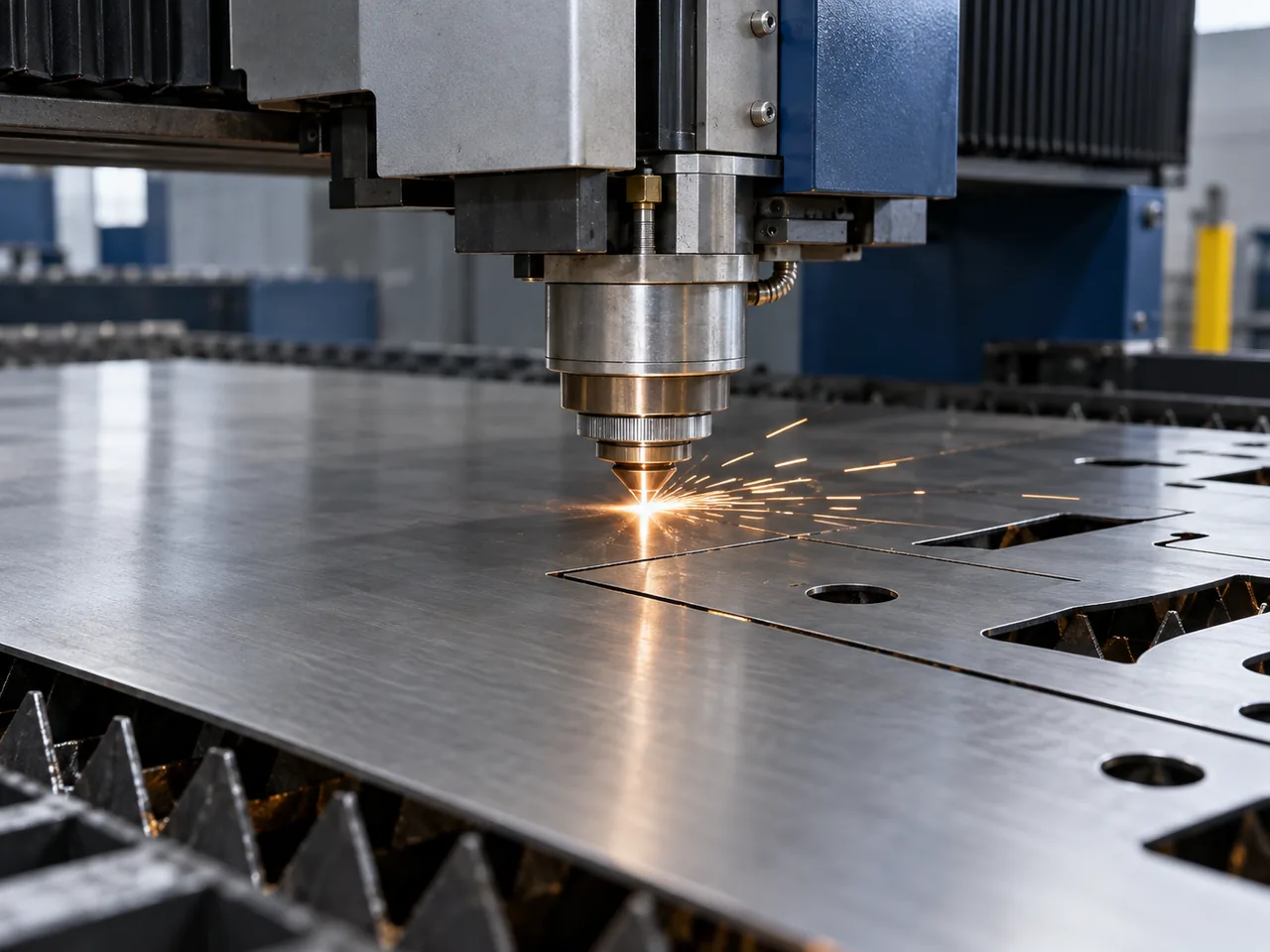
To request sheet metal laser cutting in Parma, prepare a description of the part, its material and thickness, quantities and consistent documentation. A contour file may help define the geometry, while a dimensioned drawing explains measurements, notes and requirements. Agree the required format before treating the documentation as ready for manufacturing.
FDtech, based in Langhirano, assesses laser cutting enquiries and places this work with third parties. The initial discussion clarifies what needs to be made and what information to give the provider, without assuming capacity, thickness limits or turnaround times.
Contour files and dimensioned drawings have different purposes
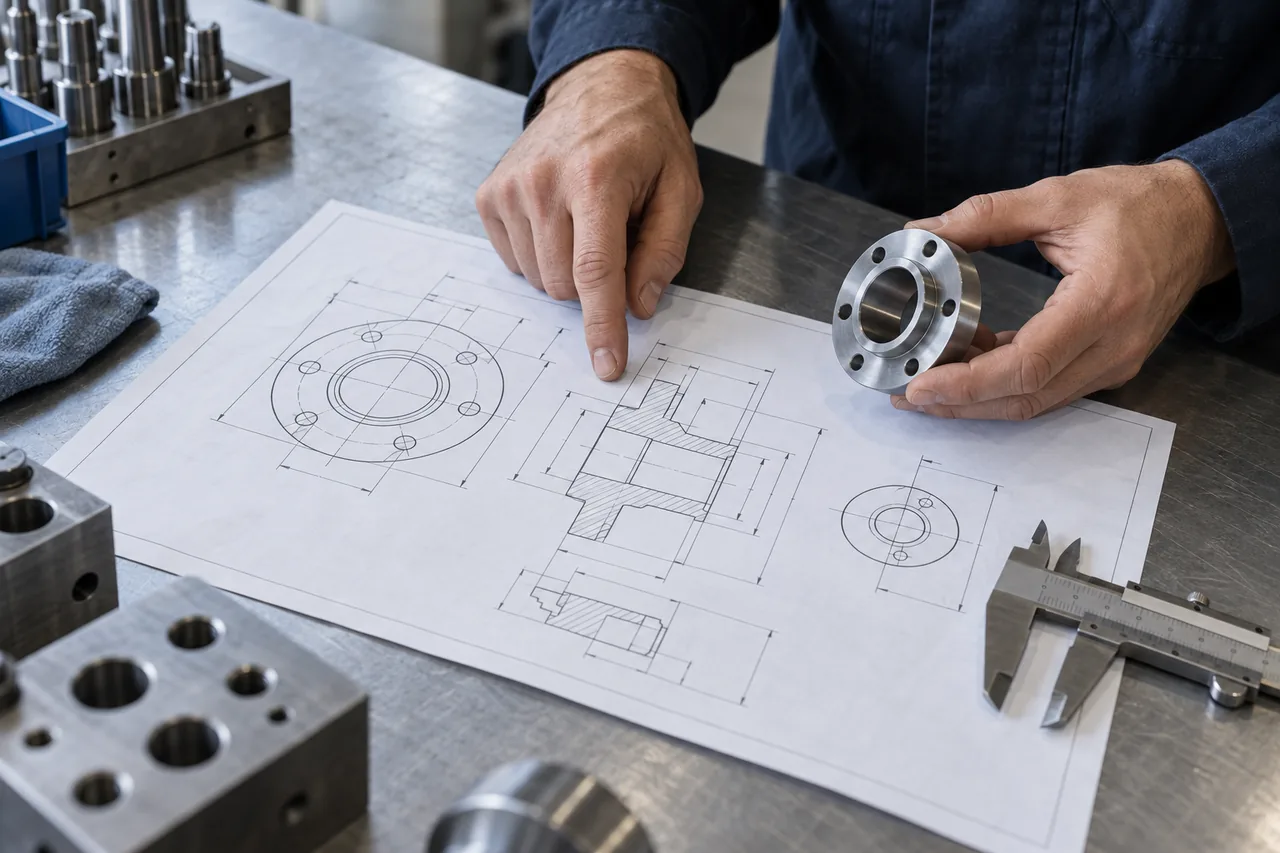
A readable drawing and usable cutting geometry are not always the same thing. The drawing describes the component and may contain dimensions, references, notes and a revision. A technical file may instead represent the contours to be processed.
DXF and other formats frequently appear in manufacturing enquiries, but the extension alone does not prove the contents are suitable. Clarify which files are useful for assessment and which need checking for production.
If you only have a PDF, sketch or three-dimensional model, say so. Repeatedly converting it without knowing the required result is less useful than agreeing the necessary next step.
Make units, scale and checking dimensions explicit
A file can open correctly while its dimensions remain ambiguous. Specify the unit of measurement and provide references that allow the outline to be compared with the intended part.
For example, a drawing can show the overall size and a relevant hole or interface dimension. The purpose is to identify a possible scale error rather than leave the entire component defined by a single isolated measurement.
Keep the drawing and technical file consistent. If two versions give different dimensions, identify the current one before asking for work to proceed. A clear note prevents the provider from having to choose between conflicting documents.
Material and thickness belong in the enquiry
Geometry alone does not identify the work. State the material specified by the project, the thickness and the quantity of each part. Identify any details still to be defined.
Do not replace a material designation with a general description such as “strong sheet metal”. Explain where the part will be used and distinguish confirmed requirements from matters requiring assessment.
The process and feasibility also depend on the material and particular component. Limits advertised for a machine or by another supplier do not automatically become capacity available for an enquiry to FDtech.
Check that the geometry describes the right part
Before sharing a file, check that it represents the requested part and revision. Identify holes, openings and contours belonging to the result, separating them from information included only to explain the drawing.
If a feature is intended for marking or another operation, flag it and ask how it should be described. Do not assume colours, layers or text will be interpreted identically by every system.
A small detail, corner or area that must mate with another part deserves a specific discussion. Avoid requesting extreme precision across the entire drawing without explaining the role of the critical dimensions.
Distinguish cutting from subsequent operations
A cut outline can be the finished result or one stage of a more complex component. State whether bending, assembly or other work is planned after cutting.
For a bent part, clarify whether the file describes the finished component or a flat pattern already assessed. Bending also requires consideration of the final shape and the information needed to read it.
If the project involves a profile or tube, describe its section and intended result and consult tube laser cutting, also carried out by third parties. Do not treat a flat outline and tubular component as automatically equivalent documentation.
A checklist for a comparable enquiry
| Information | What to communicate |
|---|---|
| Identification | Part name and current revision |
| Geometry | Available files and a readable drawing |
| Dimensions | Units and checking references |
| Material | Required designation or an open decision |
| Thickness | Required value for each part |
| Quantity | Number of parts per code or drawing |
| Function | Important surfaces, holes and mating features |
| Related work | Bending, assembly or finishing to assess |
For several parts, associate each with its quantity and revision. A simple parts list can prevent a total quantity from being assessed without knowing how it is distributed.
For a wider supply, the stainless steel fabrication quotation guide also helps describe use, assembly and project scope. This guide focuses on preparing a clear cutting enquiry.
Frequently asked questions about laser cutting files
Is a DXF mandatory for an initial assessment?
There is no universal format established here. Explain which documents you have and agree with FDtech which files are useful for assessment and subsequent work.
Does a dimensioned PDF always replace a technical file?
No. The documents can serve different purposes. A PDF can explain the intended result, while the geometry needs checking against the required processing.
Can I obtain an instant price on the website?
The form collects the enquiry; it is not an automatic pricing configurator. Work, included activities and timing are assessed for the particular job.
Does FDtech carry out laser cutting internally?
The service page states that third parties perform the work. FDtech starts with the drawing and component function to define the enquiry to place.
Prepare the discussion about your part
Describe material, thickness, quantity and available documentation in the laser cutting enquiry. The form does not accept attachments: agree how to share files during the discussion.
List any open questions. FDtech’s technical support can start from the available information to clarify the manufacturing objective and details requiring further consideration.